


28.08.2026
83
INDEPENDENCE OF UZBEKISTAN: TRADITION AND MODERNITY, STABILITY AND RENEWAL, PRESENT AND FUTURE
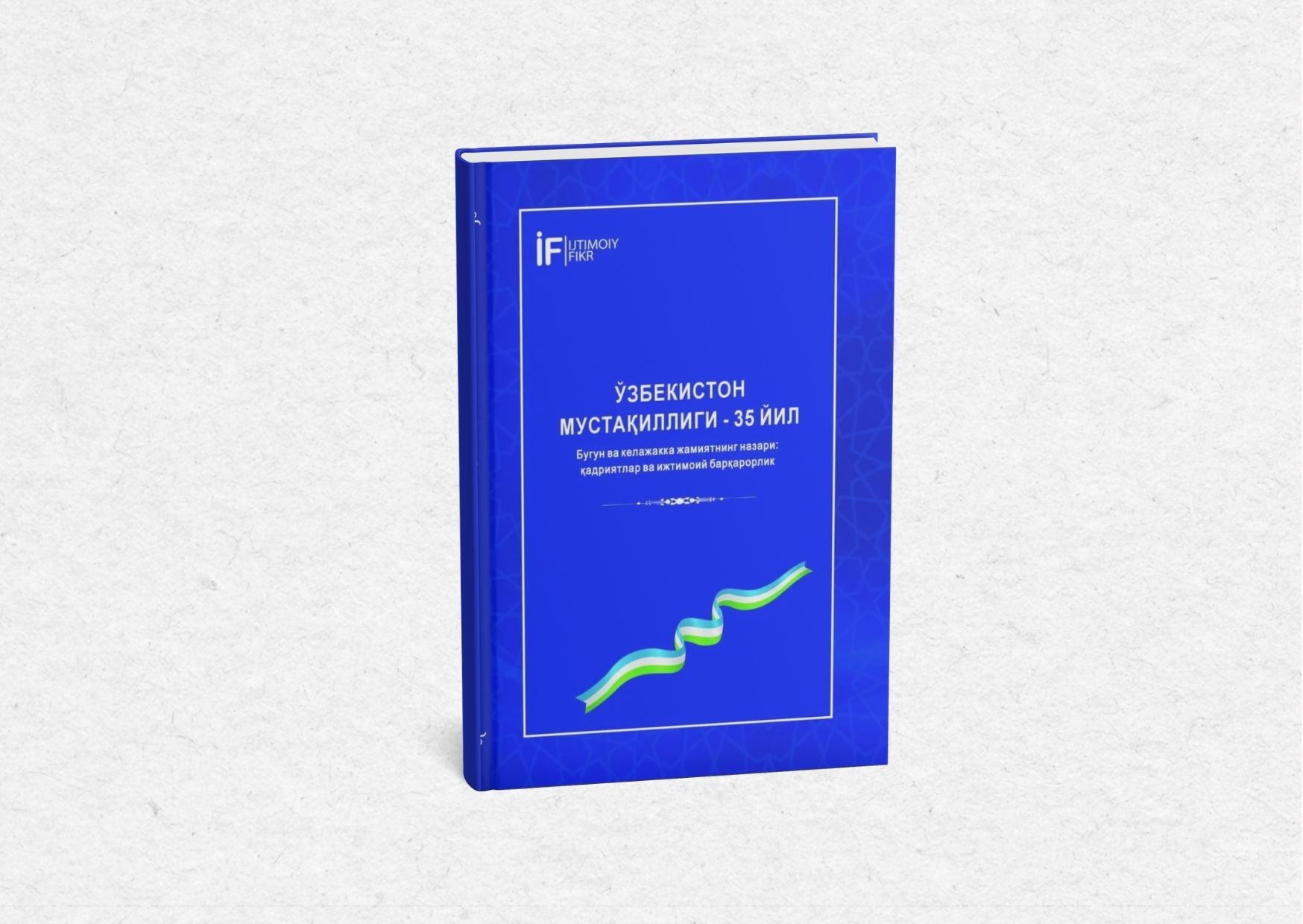
Independence is the greatest asset and achievement of the people of Uzbekistan. This year, the citizens of our multinational Motherland celebrate the 35th anniversary of the country’s main national holiday — Independence Day and the establishment of the sovereign state of the Republic of Uzbekistan.
Over the years of independence, our country has travelled a long path of development and taken its rightful place in the international community. In a relatively short period by historical standards, Uzbekistan has become a dynamically developing state striving to ensure a high standard of living for its people, build a prosperous economy based on modern technologies, establish relations of equality in foreign policy, develop business and entrepreneurship, and create sustainable economic opportunities for society and every citizen.
The large-scale reforms currently being implemented in the country at the initiative of President Shavkat Mirziyoyev have marked the beginning of a new stage in our development — the era of New Uzbekistan. In recent years, profound changes have taken place, creating an entirely new atmosphere in the political and legal, socio-economic, scientific, spiritual and cultural spheres. Important results have been achieved in safeguarding national interests and improving the standard and quality of life in the country.
Thirty-five years of state independence of the Republic of Uzbekistan represent not only a significant historical date, but also an important milestone for reflecting on the path travelled by the country. During these years, Uzbekistan has undergone a major period of formation and development as a sovereign state, established its own model of social and political development, strengthened the institutions of statehood, built new economic and social relations, and created a solid foundation for further transformations. Independence has become not merely a political fact, but a strong foundation for independent development, national self-determination, social consolidation and the implementation of large-scale transformations in all spheres of life.
For Uzbekistan, independence has not only political and legal significance, but also profound social meaning, as it created opportunities to independently determine development priorities, build relations between the state and society on a new basis, and brought issues of social justice, public trust, national identity and continuity between generations to the forefront. Over the past decades, independence has become not merely a fact of statehood, but an integral part of public life within which citizens’ perceptions of the country’s future, the role of the state, patriotism, freedom, well-being and opportunities for self-realization have been shaped.
Over 35 years, independence has become part of the historical memory and collective perception of the country’s past, present and future. That is why understanding its significance requires not only historical, political or economic analysis, but also an examination of public opinion, which makes it possible to understand the place independence occupies in citizens’ consciousness and the meaning they attach to it.
In today’s conditions, the importance of the sociology of public opinion is increasing significantly. This is due to the fact that society is becoming more dynamic, more sensitive to change and increasingly involved in discussing ongoing processes. Under these circumstances, it is important for the state not only to make decisions and implement reforms, but also to understand how they are perceived by the population, the extent to which they are supported by society and whether they genuinely contribute to improving people’s quality of life.
For Uzbekistan, such an approach is particularly relevant in the context of the large-scale transformations of recent years. The current stage of the country’s development is closely associated with the course toward building New Uzbekistan, which involves modernizing public administration mechanisms, increasing the openness of institutions, expanding opportunities for citizens and strengthening feedback between the state and society. The development of an active civil society has become an important benchmark of the ongoing transformations. President of the Republic of Uzbekistan Shavkat Mirziyoyev has placed the principle “For Human Dignity” at the heart of the reforms, according to which the individual, his or her rights, interests and well-being are regarded as the highest values of state policy. The practical implementation of this principle is reflected in the Development Strategy of New Uzbekistan for 2022–2026, which defined the key directions of the country’s further socio-economic and socio-political development.[1]
A special place in the modern history of Uzbekistan belongs to the past decade, above all to the reforms implemented since 2016 following Shavkat Mirziyoyev’s assumption of office as President of the Republic of Uzbekistan. This period has been marked by large-scale transformations in all spheres of public life and has opened a new stage in the country’s development. It is associated with the modernization of the public administration system, greater openness and transparency of state institutions, strengthening mechanisms of interaction between the state and society, and intensifying international cooperation. Considerably greater attention has been paid to protecting the rights and legitimate interests of citizens, ensuring social justice and improving the quality of life of the population.
Emphasizing the strategic nature of the transformations currently underway, President Shavkat Mirziyoyev has repeatedly stressed that reforms are not short-term campaigns, but a consistent and irreversible process. The Head of State has emphasized that any sustainable change requires time, consistency and responsibility from all participants — from the state to every individual citizen.[2]
Today, the idea is becoming increasingly firmly established in public consciousness that the effectiveness of reforms is determined not only by the scale of the measures adopted, but also by the extent to which their results are tangible for people, contribute to improving quality of life and respond to the real needs of citizens. In this context, the concept of “human interests” has acquired substantive meaning, becoming one of the key criteria for assessing the success of transformations.
At the same time, the importance of such concepts as “justice,” “public dialogue,” “civic engagement” and “public participation in social processes” has increased.
The concept of New Uzbekistan involves not only the consistent implementation of reforms, but also the expansion of opportunities for citizens to participate in the life of the country. Therefore, it is becoming increasingly important to understand the extent to which people are involved in ongoing processes, trust the reforms being implemented and feel their practical results in everyday life. It is precisely in this context that public opinion serves as an important indicator of the state of society and the effectiveness of ongoing reforms.
A special place in these processes belongs to the mahalla, which in Uzbekistan traditionally remains one of the forms of public self-organization closest to people. It is at the mahalla level that people’s real needs become particularly visible and practices of mutual assistance and everyday interaction take shape. In recent years, the importance of the mahalla has grown significantly not only as a local community, but also as an important link in the system of social support, identifying pressing problems and facilitating interaction between the population and the state. Therefore, the study of public opinion and social attitudes at the mahalla level is becoming particularly important.
The year 2026 has been declared in Uzbekistan the “Year of Mahalla Development and Strengthening Society,” reflecting the priority of state policy aimed at further strengthening social ties and improving the quality of life of the population. This step symbolizes recognition of the fact that the sustainability of the country begins with local communities, where trust, mutual assistance and a sense of belonging to the destiny of the Motherland are formed.
The President has repeatedly emphasized that in modern Uzbekistan the mahalla is not merely an administrative unit, but an important center of citizens’ lives, a place where civic engagement and belonging to the local community are expressed. It is here that residents’ initiatives emerge, relations of trust and mutual assistance are strengthened, and civic activity develops, resulting in the formation of a modern social environment based on a combination of traditional values and new development opportunities.
“A strong sense of belonging to the destiny of the Motherland and to the mahalla, which is as close to everyone as the parental home, demonstrates that this institution is, above all, the foundation of the unity of our society,” the Head of State noted.[3] This statement contains a fundamental conceptual idea: the transformation of society begins not from above, but from within.
Turning to the sociology of public opinion when reflecting on the 35th anniversary of independence makes it possible to consider this date not only as a historical anniversary, but also as a moment for society to take stock of its development. It enables us to understand how citizens assess the path travelled by the country, which changes they consider most important, which values are especially significant to them, how they perceive the present and how they envision the future of Uzbekistan.
It is therefore extremely important to focus not only on the topic of independence itself, but also on public perceptions of the processes that have taken place in the country throughout the period of sovereign development, especially in recent years.
It should be emphasized that public opinion is examined through the analysis of key spheres of life in which the population’s values, the views of various social groups and assessments of ongoing processes in the country are most clearly reflected.
An important area of analysis is the value system of society. Value orientations help us understand what people’s ideas of what is right, important and meaningful are based on, what they consider the foundation of a stable life, which life standards retain their significance and which are changing under the influence of new conditions. The study of values makes it possible to see how tradition and modernity, stability and renewal, personal interests and collective responsibility, material aspirations and moral principles are combined in public consciousness. That is why analysis of the value sphere helps to provide a deeper understanding of the internal foundations of social development.
A separate focus of the research is young people, as one of the social groups most sensitive to change. This issue is particularly significant because young people make up a substantial share of the country’s population and represent one of Uzbekistan’s most important human resources. The younger generation responds especially quickly to processes taking place in education, employment, the digital environment and public life. At the same time, young people are not only a group that is especially receptive to new conditions, but also the generation that will shape the image of the country in the coming decades. Their life plans, level of trust in public authorities, ideas about justice, patriotism, personal success and the role of the state make it possible to assess broader trends in social development and the country’s future prospects.
A special place in sociological analysis is occupied by public assessments of the development of modern Uzbekistan. Their importance lies in the fact that they allow us to view ongoing processes through the eyes of citizens themselves, understand how the population perceives the reforms being implemented, evaluates changes in different areas of life and envisions the future of the country. It is equally important to understand how satisfied people are with their lives, whether they feel confident about tomorrow, whether they trust state institutions and how they assess the prospects for the country’s further development. It is the combination of these assessments that provides a deeper understanding of the population’s social well-being and the nature of public attitudes.
Thus, values, young people and public assessments of the country’s development are considered interconnected indicators that provide a deeper understanding of the state of society and the principal directions of its development.
The large-scale transformations implemented in Uzbekistan over the past decade have substantially changed many aspects of public life. This makes it particularly important to study how citizens themselves assess ongoing processes, which outcomes they consider most significant and which changes have had the greatest impact on their everyday lives.
It is equally important to understand how the people of the country see Uzbekistan’s future development path. Comparing assessments of achievements with perceptions of the future makes it possible not only to record the current state of public consciousness, but also to identify the main reference points with which citizens associate the country’s future.
The results of many years of sociological research reflect a broad spectrum of public views and assessments regarding social development. Their analysis makes it possible to complement the picture of transformations that have taken place in the country during the years of independence with data on how these processes are perceived by citizens themselves.
The relevance of such analysis is particularly high in the year marking the 35th anniversary of the state independence of the Republic of Uzbekistan. In this regard, special importance is attached to the Resolution of the President of the Republic of Uzbekistan “On the Preparation and Wide Celebration of the 35th Anniversary of the State Independence of the Republic of Uzbekistan,” in which the anniversary of independence is viewed not only as a commemorative date but also as an important social and spiritual reference point. The document provides a broad framework for reflecting on the country’s development path, emphasizing the results of ongoing reforms, improvements in the well-being of the population, the development of national values, strengthening civic engagement, supporting the institution of the mahalla, and creating additional opportunities for young people, women and socially vulnerable groups.
The measures envisaged by the Resolution cover virtually all levels of public life — from the national to the local level, including regions, cities, districts and mahallas — emphasizing the commitment to broad public participation and citizen engagement. Of particular significance is the organization, as part of the anniversary events, of scientific and public platforms, including an international conference devoted to the 35-year development path of independent Uzbekistan. This demonstrates the aspiration to comprehensively, including scientifically, assess the achievements made and the prospects for the country’s further development.[4]
The 35th anniversary of independence is not only an occasion to take stock, but also an opportunity to reflect on the path travelled by the country during the years of independent development, evaluate the results of the transformations carried out and better understand the current state of Uzbek society. In this sense, turning to sociological research data makes it possible to identify which processes and phenomena resonate most strongly with citizens, which values retain their significance and how the population assesses the country’s development at the present stage.
The results of longitudinal public opinion monitoring show that contemporary Uzbek society is characterized by a high level of social stability, predominantly positive assessments of the processes taking place in the country and support for the reform agenda. Most citizens associate the changes of recent years with improvements in quality of life and expanded opportunities in education, healthcare, social protection and employment. Confidence in the country’s continued development remains strong in public consciousness, while the future is generally viewed positively.
Analysis of the data shows that citizens assess reforms not only through macroeconomic indicators or institutional transformations, but above all through their impact on people’s everyday lives. The highest assessments are given to those areas whose outcomes directly affect citizens’ well-being and create additional opportunities for personal and family development.
Research indicates that as society develops, citizens’ expectations regarding the quality of public administration, the effectiveness of government institutions and the practical outcomes of implemented policies are also increasing. Alongside support for reforms, the population is paying growing attention to combating corruption, improving the performance of public institutions, ensuring social justice and achieving more balanced regional development. This reflects a gradual shift from predominantly quantitative assessments of reforms toward more substantive evaluations of their effectiveness.
Thus, it can be stated that Uzbekistan is witnessing the formation of a model of rational social optimism, in which confidence in the future is combined with citizens’ growing attention to the quality of governance and the effectiveness of reforms.
In citizens’ public consciousness, Uzbekistan’s independence is perceived not only as an event of exceptional historical significance associated with the attainment of state sovereignty, but also as a fundamental social value that determines the country’s development opportunities, the well-being of the population and confidence in the future. For the majority of the people of Uzbekistan, independence remains the most important foundation of political stability, peaceful life, security, economic growth and the preservation of national identity.
It is noteworthy that the perception of independence in public consciousness is closely associated not only with historical memory but also with assessments of contemporary transformations. For a significant proportion of the population, the achievements of recent years are perceived as a natural continuation and development of the potential established during the years of independence. In this context, citizens perceive independence not as a completed achievement, but as an ongoing process of state development, institutional strengthening and improvement in people’s quality of life.
The study results show that citizens’ sense of involvement in the transformations taking place in the country is becoming stronger. The population increasingly views itself not merely as an observer, but as a direct participant in social development processes. This is reflected in growing interest in socially significant issues, demand for participation in public dialogue and a desire to be heard when pressing issues are discussed.
Public opinion survey results convincingly demonstrate that Uzbekistan has approached the 35th anniversary of state independence while preserving its most important spiritual and moral values, maintaining a high level of social cohesion and ensuring confidence among a significant part of the population in the country’s continued development. For the majority of citizens, independence remains not only the most important value uniting society, but also a real foundation for current transformations and the further development of the state.
A characteristic feature of contemporary Uzbek society is the combination of commitment to traditional values with openness to innovation, a desire for stability with support for reforms, and patriotism with an interest in further improving quality of life and the effectiveness of public administration. These features largely shape the social atmosphere that has developed in the country at the present stage.
In the context of implementing the concept of New Uzbekistan, this creates favorable conditions for further development, strengthening social harmony and expanding citizens’ participation in addressing issues that are important for the progressive development of the Republic. Most citizens are characterized by a sense of responsibility for their country, their people and the future of Uzbekistan. Citizens understand the vital importance of independence and freedom, peace and tranquility, political stability and national unity.
REFERENCES
[1] Decree of the President of the Republic of Uzbekistan No. UP-60 dated January 28, 2022, “On the Development Strategy of New Uzbekistan for 2022–2026.”
https://nrm.uz/contentf?doc=684003_ukaz_prezidenta_respubliki_uzbekistan_
[2] Address by President of the Republic of Uzbekistan Shavkat Mirziyoyev to the Oliy Majlis and the people of Uzbekistan, 2025.
https://president.uz/ru/lists/view/8834
[3] Address by President of the Republic of Uzbekistan Shavkat Mirziyoyev to the Oliy Majlis and the people of Uzbekistan, 2025.
https://president.uz/ru/lists/view/8834
[4] Resolution of the President of the Republic of Uzbekistan “On the Preparation and Wide Celebration of the 35th Anniversary of the State Independence of the Republic of Uzbekistan,” dated April 2, 2026.
https://president.uz/ru/lists/view/9072
Nigina Rakhimova
Director of the Republican Center for the Study of Public Opinion “Ijtimoiy Fikr”, Doctor of Economics (DSc)