


07.04.2026
101
DIGITAL PUBLIC SERVICES IN THE DAILY PRACTICES OF CITIZENS: CONVENIENCE AND TRUST
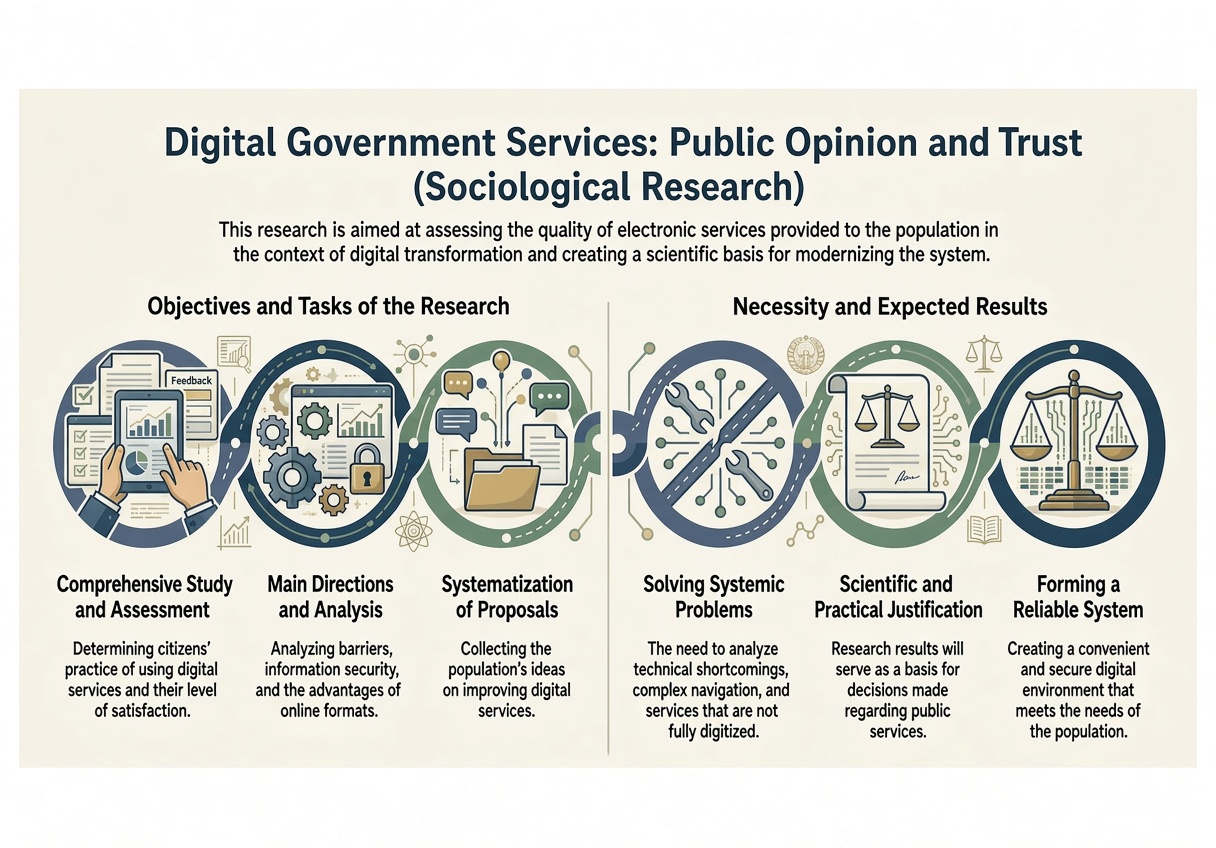
Starting from April 5 of the current year, the Republican Center for the Study of Public Opinion “Ijtimoiy Fikr” has launched a large-scale sociological survey among the country’s citizens on the topic “Digital Public Services in the Daily Practices of Citizens: Convenience and Trust.”
This study is driven by the need to modernize the system of public services amid the accelerating processes of digital transformation, improve the quality of electronic services provided to the population, and assess their effectiveness based on public opinion.
At present, digital public services perform important functions: they allow citizens to save time and resources, access services remotely, and enhance the transparency of public administration. At the same time, the practical use of these services reveals technical problems, concerns related to information security, difficulties with interface design and navigation, and, in some cases, incomplete digitalization of certain services. All of this requires an in-depth scientific analysis of this field.
The purpose of this study is to comprehensively examine citizens’ practices of using digital public services, their level of satisfaction, trust in these services, and their overall attitudes toward them.
Within the framework of the study, it is planned to determine the level and scope of the population’s use of digital services, analyze preferences regarding online and traditional service formats, examine the main problems and barriers arising in the process of using these services, assess the level of trust in the services and attitudes toward personal data security, identify public opinion on the speed, convenience, and effectiveness of public services, and systematize citizens’ proposals aimed at the further improvement of digital services.
The study is being conducted throughout the republic, covering various socio-demographic groups and territories. Its results will contribute to the scientific and practical justification of decisions taken in the field of digitalization of public services, as well as to the development of a more convenient, effective, and reliable service system that takes into account the needs and expectations of the population.