


04.06.2026
64
GENDER EQUALITY AND THE FIGHT AGAINST CORRUPTION: THE ROLE OF SCIENTIFIC RESEARCH AND PUBLIC OPINION
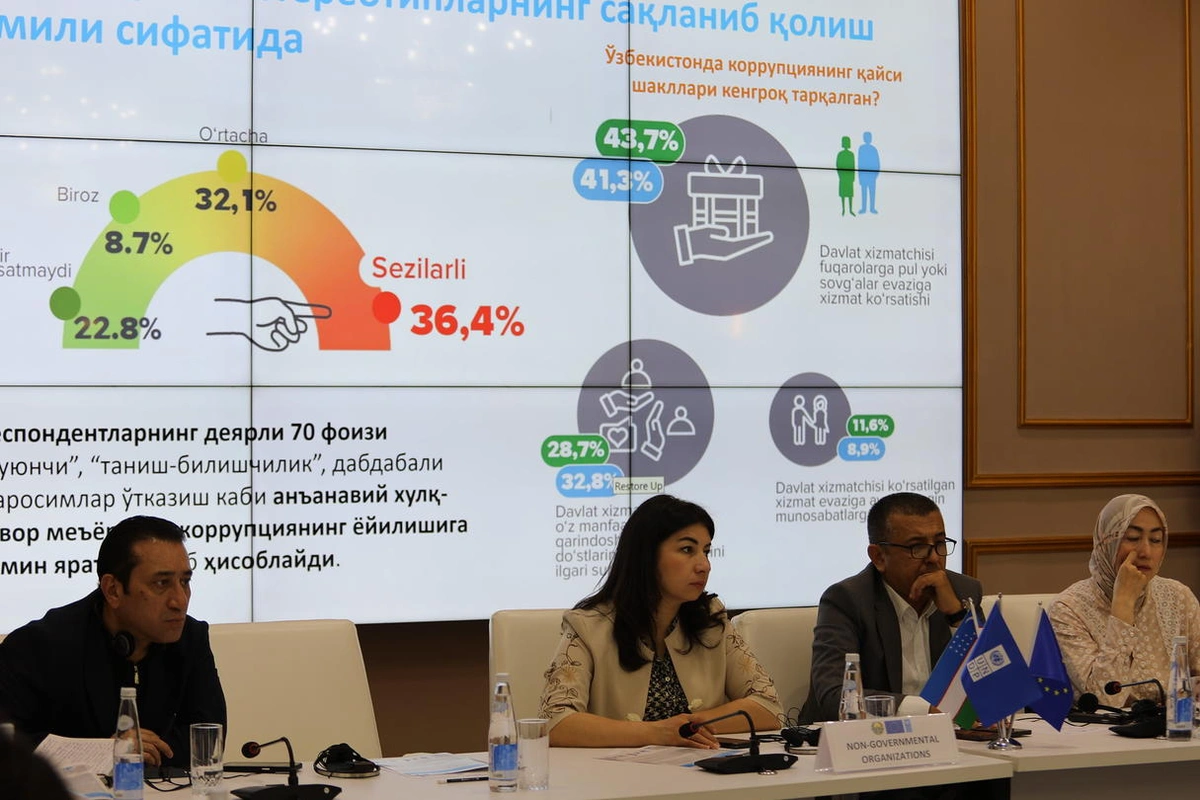
An event dedicated to the development of gender-sensitive approaches to combating corruption, the discussion of scientific research findings in this area, and the study of international experience was held in Tashkent. The dialogue platform brought together representatives of government institutions, international organizations, experts, research centers, and civil society to comprehensively discuss the interconnected dimensions of corruption and gender equality.
Umida Khalikova, Head of Department at the Republican Center for the Study of Public Opinion “Ijtimoiy Fikr”, took part in the event. During the meeting, participants exchanged views on incorporating gender considerations into anti-corruption policy, regularly studying public opinion, and effectively using scientific research findings in decision-making processes.
Today, corruption is regarded not only as an economic and legal problem, but also as a complex social phenomenon that affects social development, equal opportunities, and the principles of justice. Therefore, gender analysis is becoming increasingly important in the development of anti-corruption measures. A gender-sensitive approach makes it possible to identify how different social groups, particularly women and men, encounter corruption risks in areas such as public services, education, healthcare, employment, and social protection.
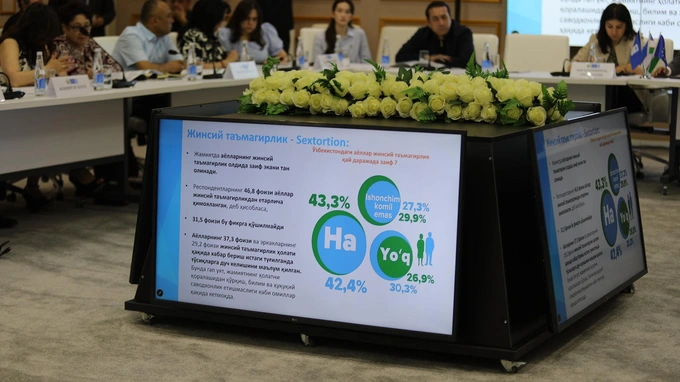
As noted by officials and experts, gender analysis is an important tool for assessing the impact of government programs and reforms on different segments of the population, gaining a deeper understanding of the factors contributing to corruption, and designing more targeted preventive measures. Along with enhancing the effectiveness of anti-corruption efforts, this approach contributes to strengthening the principles of social justice and equal opportunities.
The Republican Center for the Study of Public Opinion “Ijtimoiy Fikr” regularly examines social processes related to corruption in Uzbekistan. The sociological studies conducted by the Center analyze the main forms and causes of corruption, public attitudes towards corruption, levels of perceived corruption, corruption risks in various sectors, and the way these issues are reflected in public consciousness.
At the same time, the Center’s research pays particular attention to the gender dimension. Gender-disaggregated data and appropriate analysis are essential for a comprehensive assessment of the social consequences of corruption and its impact on different groups of the population. This creates opportunities for developing evidence-based approaches to decision-making in the field of anti-corruption policy.
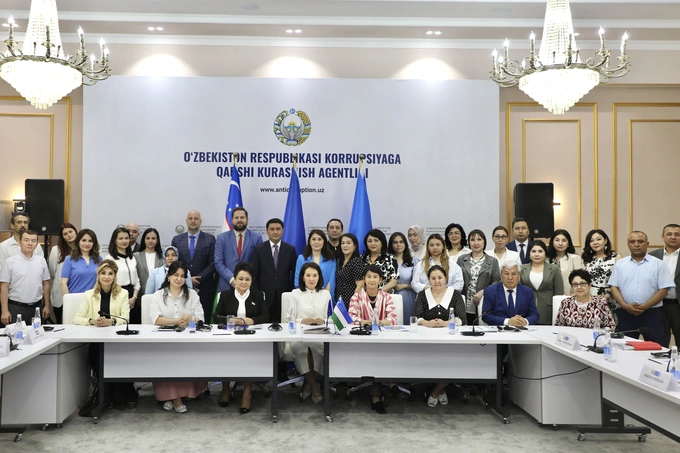
International experience demonstrates that studying public opinion, analyzing citizens’ attitudes towards existing challenges, and widely applying gender analysis are important components of effective anti-corruption policy. Such research makes it possible to identify less visible mechanisms of corruption, associated risk factors, and their broader social consequences.
The event served as an important dialogue platform for strengthening the role of scientific research in combating corruption, advancing approaches aimed at ensuring gender equality, and enhancing cooperation between government bodies, academic institutions, and the public. Such research and expert discussions play an important role in strengthening the evidence base for reforms aimed at further promoting openness, transparency, and social justice in Uzbekistan.