


27.08.2026
121
35 YEARS OF INDEPENDENCE: SOCIETY’S VIEW OF THE PAST, PRESENT AND FUTURE
(Based on the results of a public opinion survey)
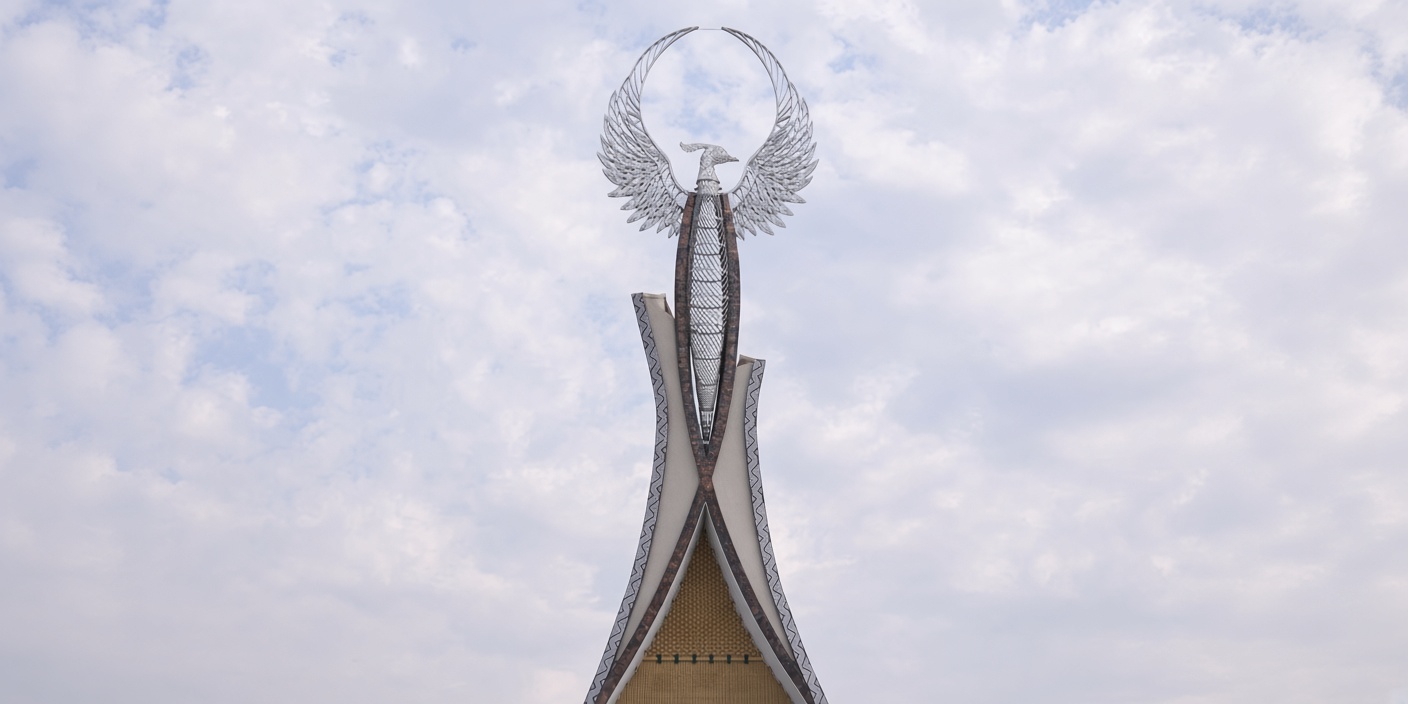
On September 1, 1991, a new independent state — the Republic of Uzbekistan — appeared on the political map of the world. This day marked the beginning of profound historical transformations, during which the people of Uzbekistan, drawing on their rich historical and cultural heritage, confidently embarked on the path of building a modern and dynamically developing state.
Over these years, our country has implemented large-scale transformations and strengthened the foundations of statehood, consolidating its status as a sovereign, democratic, rule-of-law and secular state in which human rights and freedoms are recognized as the highest value.
The achievements made in political and socio-economic development have become a solid foundation for addressing further major tasks aimed at strengthening statehood and the international standing of our country, ensuring sustainable development and improving citizens’ well-being.
The 35th anniversary of state independence is a significant socio-political and historical date that provides an opportunity to take stock of the path the country has travelled and to examine citizens’ assessments, value orientations and expectations regarding the present and future of the state and society.
The Republican Center for the Study of Public Opinion “Ijtimoiy Fikr” conducted a survey, the relevance of which is determined by the need to study public opinion on independence, its place in citizens’ system of values, the country’s most significant achievements from the perspective of the people of Uzbekistan, and citizens’ perceptions of the priorities for Uzbekistan’s further development.
Thirty-five years is a period during which independence has evolved from a historical event into an integral part of everyday public consciousness. A generation of citizens has emerged that was born and raised in independent Uzbekistan. This is why the following questions are of particular importance today: what meaning does society attach to the concept of independence, what is perceived as its greatest achievement, and what kind of state do citizens want to see in the future?
These questions are of both practical and scientific significance. Public opinion makes it possible to consider independence not only as a political and legal category or a historical fact, but also as a social and value-based reality reflected in public consciousness.
The regulatory and legal basis of the study is the Resolution of the President of the Republic of Uzbekistan dated April 2, 2026, “On the Preparation and Wide Celebration of the 35th Anniversary of the State Independence of the Republic of Uzbekistan.”
The Resolution contains a fundamentally important characterization of independence for the purposes of the study:
“National independence is the genuine expression of the will of our courageous and steadfast people, the embodiment of the hopes and aspirations of our heroic ancestors who fought for independence, the foundation of our noble work to build a New Uzbekistan, and the greatest and most sacred value that we must preserve and pass on to future generations.”
The Resolution also approved the central idea of celebrating the 35th anniversary of state independence: “With one Motherland and one people, we will build a new life and a new future!” This idea underscores the relevance of studying values, civic identity, a sense of belonging to the country’s destiny and readiness to participate in shaping its future.
The Decree of the President of the Republic of Uzbekistan dated June 25, 2026, “On the Establishment of the Commemorative Badge ‘35th Anniversary of the Independence of the Republic of Uzbekistan’”, places particular emphasis on the results of the country’s development based on the updated Constitution and the “Uzbekistan – 2030” Strategy: socio-economic development, the enhancement of human dignity, the strengthening of peace and stability, friendship and cohesion in society, the preservation of historical and cultural heritage, the development of good-neighborly relations and the enhancement of Uzbekistan’s international standing. In this regard, it becomes especially important to understand the extent to which these meanings are reflected in citizens’ own perceptions.
The public opinion survey is aimed at comprehensively studying citizens’ views and perceptions of independence, identifying how the people of Uzbekistan assess the country’s achievements over the years of independence, and examining their expectations regarding Uzbekistan’s further development.
During the survey, citizens were asked: “What feelings does the approaching 35th anniversary of Independence evoke in you?” The most common response was a sense of pride. This feeling combines respect for one’s country, recognition of its achievements and confidence in its further development. According to citizens, over the past decades independence has become not only a historical choice but also a reality filled with concrete results — stronger statehood, economic and social development, achievements by young people, science, culture and sport, and the growth of the country’s international standing. The sense of pride in their country, characteristic of the majority of the people of Uzbekistan, is an important indicator of citizens’ emotional connection with the history and contemporary development of Uzbekistan.
The second most popular response was “a festive, uplifted and joyful mood.” For citizens, Independence Day is filled with a special sense of joy and anticipation. This mood is experienced as a shared emotional uplift, when the approaching significant date evokes positive feelings, a good mood and a desire to share the festive atmosphere with relatives, friends and those around them.
The survey showed that in the days leading up to the holiday, citizens are also characterized by “a sense of national cohesion and unity.” For the people of Uzbekistan, the anniversary of independence becomes a time when a special sense of closeness to one another is felt, and shared history and belonging to one country take on particular significance.
An important finding is that citizens closely associate independence with hope and confidence in the future. Independence is perceived as a foundation for future hopes, opportunities and life prospects.
Another widespread feeling experienced by citizens on the eve of the 35th anniversary of state independence is “a sense of personal responsibility for the country’s destiny.” The survey showed that people’s feelings are not limited to the festive moment itself; they are also connected with a readiness to contribute their own efforts to the country’s development and to feel personally involved in its present and future.
“Gratitude to older generations,” which survey participants also expressed on the eve of this significant date, indicates that historical continuity holds a special place in public consciousness. The country’s present-day condition is perceived as an invaluable legacy of previous generations. The gratitude felt by citizens represents a special form of historical memory that connects today’s achievements with those who, through their labor, contributed to shaping the country in earlier periods.
The public opinion survey identified the achievements of the country over the years of independence that the people of Uzbekistan consider the most significant.
Economic development, support for entrepreneurship and job creation are among the areas that survey participants associate with the country’s achievements. In public opinion, economic progress is directly linked to economic growth, the expansion of production and investment activity, the creation of favorable conditions for entrepreneurship and employment, and improvements in citizens’ well-being. The survey findings confirm that economic transformations are improving people’s lives, creating new sources of income, opening up new opportunities for doing business and developing entrepreneurship, and contributing to higher family living standards.
Among the country’s most important achievements during the years of independence, citizens also identify the preservation of peace, stability and security. For people, peace and security are among the highest values and are regarded as essential foundations of economic and social development.
During the survey, citizens noted that in recent years the country has achieved important results in strengthening state sovereignty and defense capability. According to respondents, these changes reflect the consistent strengthening of the state’s capacity to independently ensure national security and respond to contemporary challenges.
The survey also showed that there is a widespread perception that Uzbekistan has made progress in improving living standards and strengthening social protection. Citizens note positive changes in the expansion of social support, poverty reduction, improvement of housing conditions and the creation of greater opportunities for enhancing well-being and quality of life.
Achievements in education, science and opportunities for young people were also highly rated by citizens. The positive assessment of this area demonstrates that people measure the achievements of independence not only by results already obtained, but also by the opportunities being created for future generations. Human capital is increasingly viewed as one of the most important resources for Uzbekistan’s continued development.
The development of healthcare was also named among the most significant achievements. Citizens note the modernization of medical infrastructure, improved accessibility and quality of services, the introduction of modern technologies and the development of the professional capacity of healthcare workers. These changes are particularly important for the people of Uzbekistan because personal health and family well-being are direct indicators of quality of life. Therefore, the development of healthcare is perceived as an important component of the broader social achievements of independence.
The survey revealed that citizens consider the development of infrastructure and the improvement of cities and villages to be a significant achievement of recent years. New roads, renovated streets, modern residential areas, landscaped territories and improved public spaces are gradually transforming the familiar appearance of cities and villages. It is precisely this visible nature of infrastructure improvements that makes them one of the most tangible achievements of recent years.
Noticeable progress has also taken place in digitalization, modern technologies and innovation. Survey participants regard these developments as one of the achievements of independence. Digital technologies are gradually becoming part of citizens’ everyday lives — from public services and electronic payments to education, entrepreneurship and other areas.
The survey showed that significant results have been achieved in the preservation and development of national culture, language and traditions. Respondents note positive changes in strengthening national identity, preserving the native language, developing literature and art, maintaining traditions and protecting historical memory. During the years of independence, conditions have been created in which national culture has been able not only to preserve what has been accumulated by generations but also to develop and find its place in modern life.
Participants also regard progress in the development and modernization of public administration and civil society institutions as one of the country’s achievements in recent years. According to citizens, changes are taking place in the very organization of public life: the effectiveness of public administration is increasing, public services are improving, mechanisms for public participation are developing and opportunities for citizens to interact with state institutions are expanding.
Citizens identify the growth of Uzbekistan’s international standing as one of the most important achievements of independence. In the perception of survey participants, during the years of independent development the country has strengthened its position on the international stage, expanded its range of partners and become more actively involved in regional and global processes.
The survey showed that the development of good-neighborly relations with countries of the region received a high assessment from participants. According to citizens, stronger relations with neighboring states have become one of the important results of independent development because they directly influence the stability and prospects of Central Asia. Respondents note expanded cooperation in trade, transport, education, tourism and culture, stronger mutual trust and new opportunities for joint projects. In this context, good-neighborliness is viewed as an important achievement of independent Uzbekistan’s foreign policy, whose results are felt not only at the interstate level but also in the everyday lives of ordinary people.
Citizens also associate the development of sport and the outstanding achievements of Uzbek athletes on the international stage with the successes of independent Uzbekistan. Survey participants view athletes’ victories at major international competitions as one of the most emotionally powerful symbols of national success. In public consciousness, such achievements extend far beyond sport itself: they demonstrate the country’s capabilities, strengthen national pride and serve as an example for young people. Behind every international victory, citizens see hard work, discipline, professional preparation and a determination to represent Uzbekistan with dignity on the world stage.
Overall, the findings show that citizens perceive independence through the totality of changes that have taken place in the country over the decades. For the people of Uzbekistan, the achievements of independence are embodied in New Uzbekistan — a country with strengthened state sovereignty, a developing economy, new social and educational opportunities, modern infrastructure and a growing international standing, while at the same time preserving its national identity.
The study showed that public opinion is dominated by the view that in recent years, thanks to the balanced and well-considered foreign policy pursued under the leadership of President Shavkat Mirziyoyev, Uzbekistan has substantially strengthened its position on the international stage, expanded its circle of strategic partners, intensified its participation in addressing regional and global issues and become a visible center of international dialogue.
Our country is developing strategic cooperation with states both near and far, strengthening ties with the countries of Central Asia, and making a tangible contribution to addressing contemporary global challenges — from ensuring peace and sustainable development to overcoming climate and environmental problems.
Uzbekistan’s initiatives at the United Nations aimed at developing education, supporting young people, strengthening regional connectivity, ensuring the rational use of water resources and restoring the ecosystem of the Aral Sea region demonstrate the country’s transition from the role of an active participant in international processes to that of a state that formulates its own initiatives and offers concrete solutions to the world.
The findings confirm that citizens highly and positively assess the changes in the country’s international position. The overwhelming majority of respondents emphasize positive dynamics in strengthening Uzbekistan’s position on the international stage.
For citizens, changes in the country’s foreign policy standing have become an important part of the contemporary image of Uzbekistan — a country open to the world, confidently defending its interests and ready for cooperation on the basis of equality.
Uzbekistan’s international achievements are perceived by citizens as an important component of the accomplishments of an independent state that is strengthening its own position and striving to contribute to solving common regional and global problems. The growth of Uzbekistan’s international standing is becoming for citizens not merely an indicator of foreign policy success, but also a source of national pride and evidence that independent Uzbekistan is confidently taking its rightful place in the international community.
On the eve of the 35th anniversary of independence, the public opinion survey confirms the commitment of the people of Uzbekistan to the values that form the foundation of national unity.
The survey results show that family ranks first among the values that unite citizens. The family is the primary institution in which a citizen is raised, serves as a foundation of national identity, and helps preserve and transmit culture, traditions and moral values to future generations.
The second value that unites the people of Uzbekistan is the aspiration for peace and stability. In the context of social and economic transformation, peace and stability serve as a foundation for progressive social development and remain fundamental values for citizens.
Another unifying value for the people of Uzbekistan is a shared sense of Motherland and citizenship. Citizens attach great importance to citizenship because it contributes to the formation of civic identity and unites individuals and the people into a single nation.
During the survey, citizens noted that love for their native land unites the people of Uzbekistan. For many, this feeling is connected with the place where they spent their childhood and youth, with their native city or village, loved ones, nature and the familiar way of life. Such an emotional bond with the Motherland creates a desire to see it prosperous and flourishing, to preserve its heritage and to look to the future with confidence. According to survey participants, this feeling is characteristic of the majority of citizens of our country.
Historical memory, culture and traditions are also values that, according to survey participants, are characteristic of the people of Uzbekistan. Respondents believe that cultural heritage connects generations, preserves continuity and helps people understand their shared historical experience. The findings indicate that culture, traditions and spiritual heritage are perceived as important conditions for social unity.
Mutual assistance and support, as well as respect for representatives of different nationalities and religions, are also among the values that, according to survey participants, unite the people of our country.
Overall, the study revealed a high level of positive perception of independence and its significance in public consciousness. Thirty-five years represent an entire era during which the country’s present, its social values and its vision of the future have taken shape.
Today, independence is perceived as a living reality in which the memory of the past, the achievements of the present and aspirations for the future come together — toward further development and new opportunities for Uzbekistan.