


14.05.2026
111
THE DEVELOPMENT OF DIGITAL PUBLIC SERVICES IN UZBEKISTAN HAS BECOME ONE OF THE MOST IMPORTANT AREAS OF PUBLIC ADMINISTRATION MODERNIZATION IN RECENT YEARS
In recent years, the development of digital public services in Uzbekistan has become one of the most important areas of public administration modernization. The digital transformation processes being implemented in the country are aimed not only at modernizing the public service system, but also at creating a convenient, efficient, and transparent service environment for citizens.
At a videoconference chaired by President of the Republic of Uzbekistan Shavkat Mirziyoyev, dedicated to reviewing the work carried out in 2025 in the fields of digital technologies, artificial intelligence, and telecommunications, as well as the priority tasks for 2026, the expansion of digital public services was also identified as one of the strategic priorities. The Head of State emphasized that the development of the digital economy, the digitalization of public services, and the introduction of modern electronic platforms are essential conditions for improving the quality of life of the population.
Today, the number of services provided through the Unified Interactive Public Services Portal my.gov.uz, mobile applications, and other electronic platforms continues to grow. This is bringing relations between the state and citizens to a qualitatively new level.
The results of the public opinion survey entitled “Digital Public Services in Citizens’ Everyday Practices: Convenience and Trust,” conducted by the Republican Center for the Study of Public Opinion “Ijtimoiy Fikr” in April 2026, showed that digital public services are playing an increasingly important role in the daily lives of the population. The study made it possible to assess the level of use of digital services, public trust in them, existing challenges, and promising areas for further development.
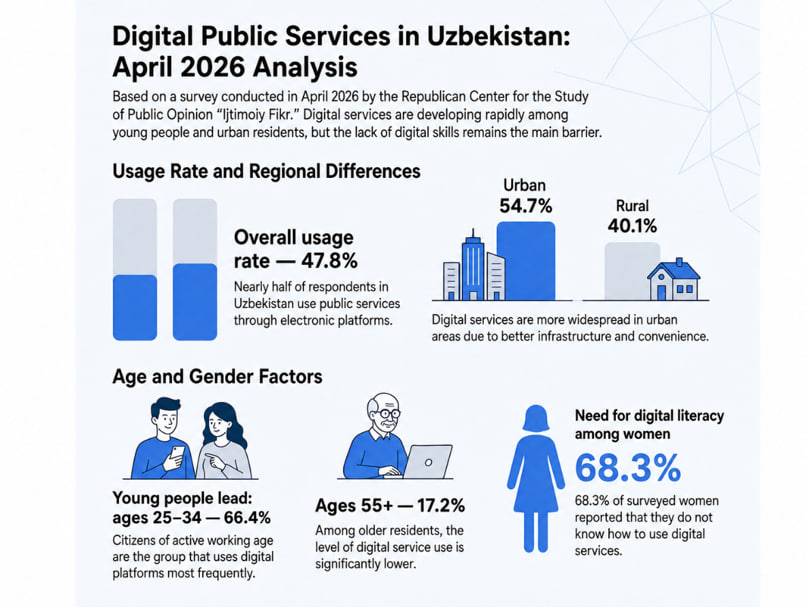
According to the analysis, nearly half of respondents — 47.8% — reported using digital public services via the Internet, mobile applications, and other electronic platforms. The level of digital service use was particularly high among urban residents, reaching 54.7%, compared with 40.1% in rural areas.
The study also showed that age is an important factor in the use of digital services. Younger people are considerably more active users of digital platforms. In particular, 66.4% of respondents aged 25–34 and 59.4% of those aged 35–44 reported using digital public services. Among citizens aged 55 and over, this figure stood at 17.2%.
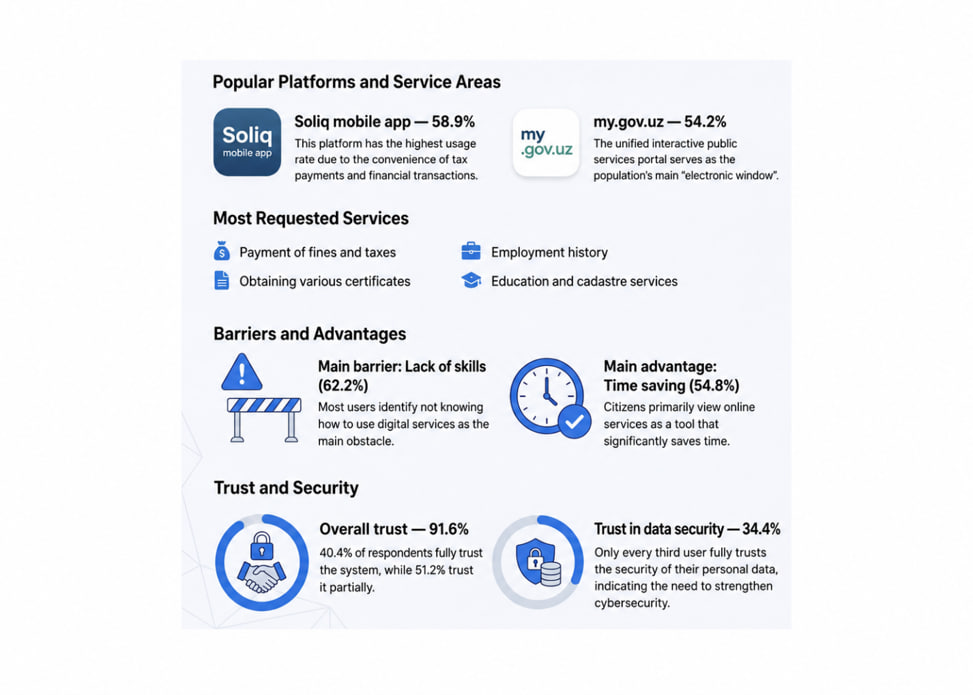
Survey participants identified insufficient digital skills as the main reason for not using digital public services. In particular, 62.2% of respondents cited “not knowing how to use them” as a key barrier. In addition, 40.4% of participants indicated that they had no practical need to use digital services.
The study also revealed a need for additional support for women in using digital services. According to the findings, 68.3% of women reported that they did not know how to use digital public services. This indicates the need to further expand digital literacy programs for specific groups of the population.
Citizens’ responses regarding their preferred format for receiving public services also revealed important trends. While 51.9% of respondents stated that they prefer online services, 28.3% favored the traditional method of applying in person. This suggests that digital public services are increasingly perceived as a convenient and time-saving mechanism.
The Soliq mobile application, the my.gov.uz mobile application, and electronic systems related to government payments were identified among the most popular platforms for accessing public services online. In particular, 58.9% of respondents reported using the Soliq application, while 54.2% used the my.gov.uz mobile application.
The most widely used digital public services include online payment of fines, taxes, and duties; obtaining certificates and extracts; accessing information on employment history and wages; educational services; and cadastral and housing-related services.
The study also examined the level of public trust in digital public services. According to the results, 40.4% of respondents stated that they fully trust digital public services, while 51.2% said they trust them to some extent. This indicates the emergence of a positive public attitude toward digital public administration in the country.
At the same time, issues related to the security of personal data remain a matter of concern for citizens. 34.4% of respondents reported full confidence in the security of their personal data, while 38.5% expressed partial confidence. This highlights the need to further increase public awareness of digital security.
Survey participants identified time savings as the main advantage of digital public services. 54.8% of respondents believe that digital services allow citizens to “save a significant amount of time.” In addition, the majority of participants stated that finding the required public service online is “easy” or “very easy.”
According to experts, the expansion of digital public services is not merely a matter of technological modernization, but also an important social factor that directly affects the quality of life of the population. Providing public services through digital platforms helps save time, reduce excessive bureaucracy and paperwork, increase the transparency of government bodies, and minimize corruption-related risks.
According to analyses by the “Ijtimoiy Fikr” Center, digital public services are becoming an important part of citizens’ everyday social practices. At the same time, further development of digital infrastructure, expansion of Internet access in rural areas, improvement of digital literacy among older citizens and women, and strengthening public confidence in information security remain important priorities.
The findings demonstrate that Uzbekistan’s system of digital public administration is entering a new stage of development. This process contributes to the creation of a modern, efficient, and people-centered public service system that serves the interests of citizens, strengthens mutual trust between the state and society, and reinforces the institutional foundations of digital development in New Uzbekistan.